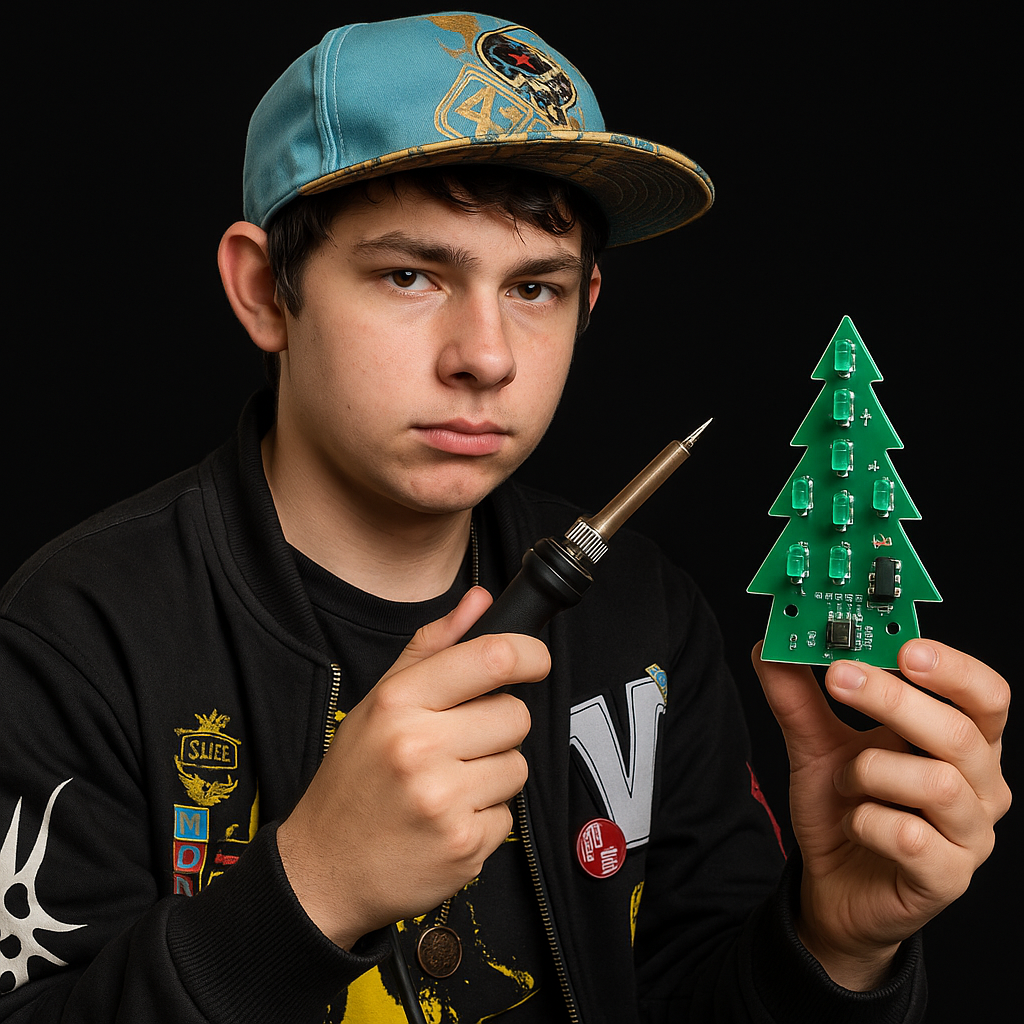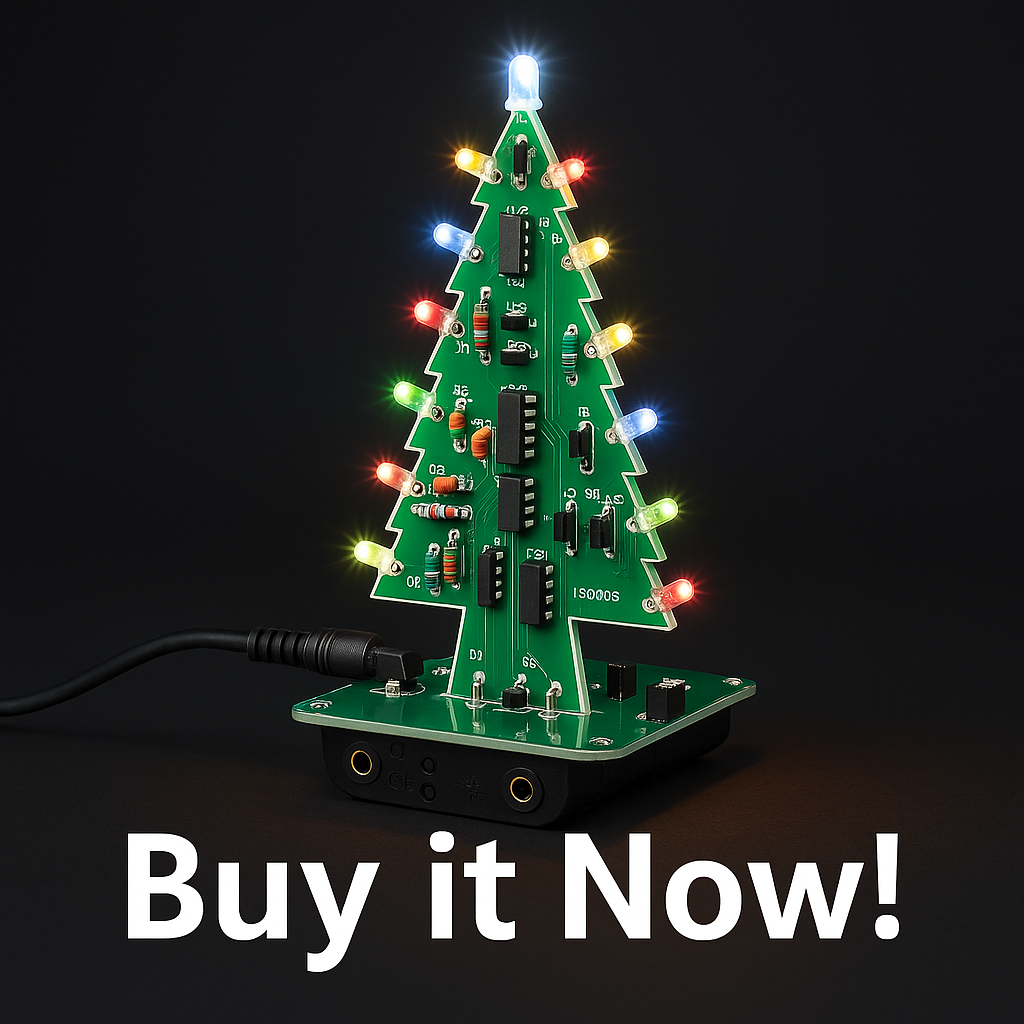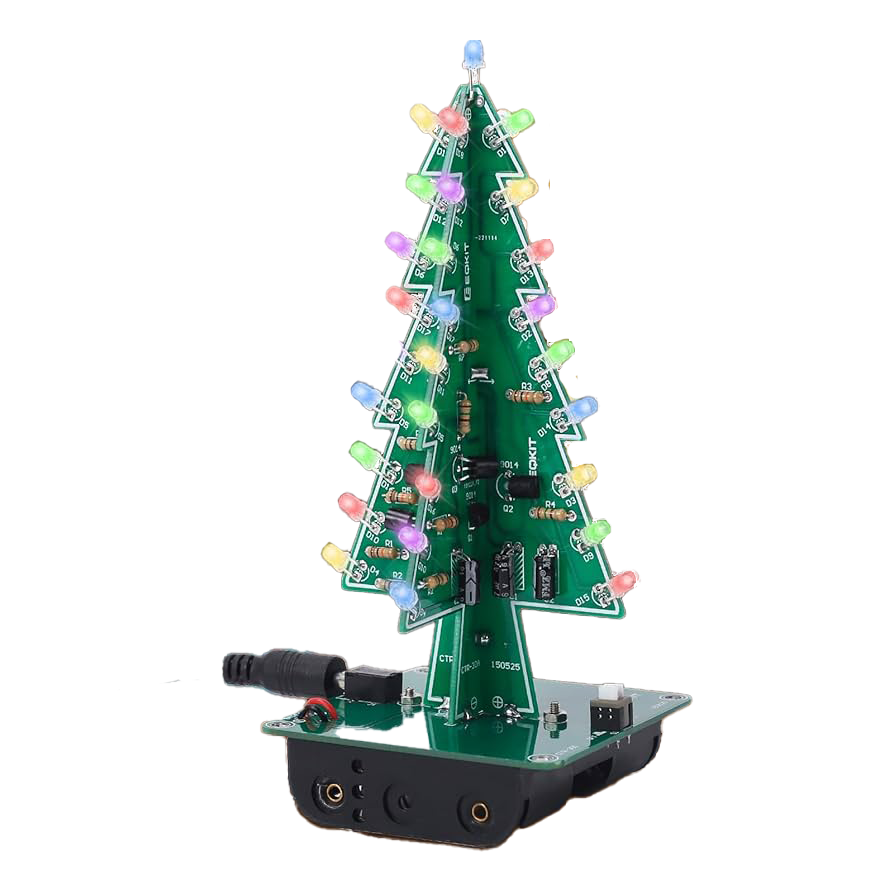
| 5" Hand-Built LED Trees. | |
| $69.99 (USD) ea. | |
|
|
|
Order by Phone Call: (877) 60-TREES (877) 608-7337 |
|

| Welcome to tinyLEDtree.com | |||||||||||
|
|
|
||||||||||
|
Quantanalog™ EvPA Core with
Phase-Shifting Multispectral Non-Ionizing Photonic Emission Array utilizing AEPCA Emitters |
|
 |
|
 |
 |
| Click here for Printer Friendly Version | |
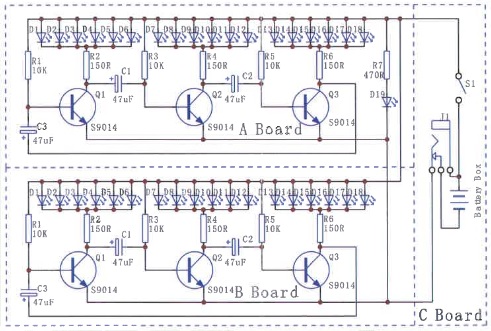
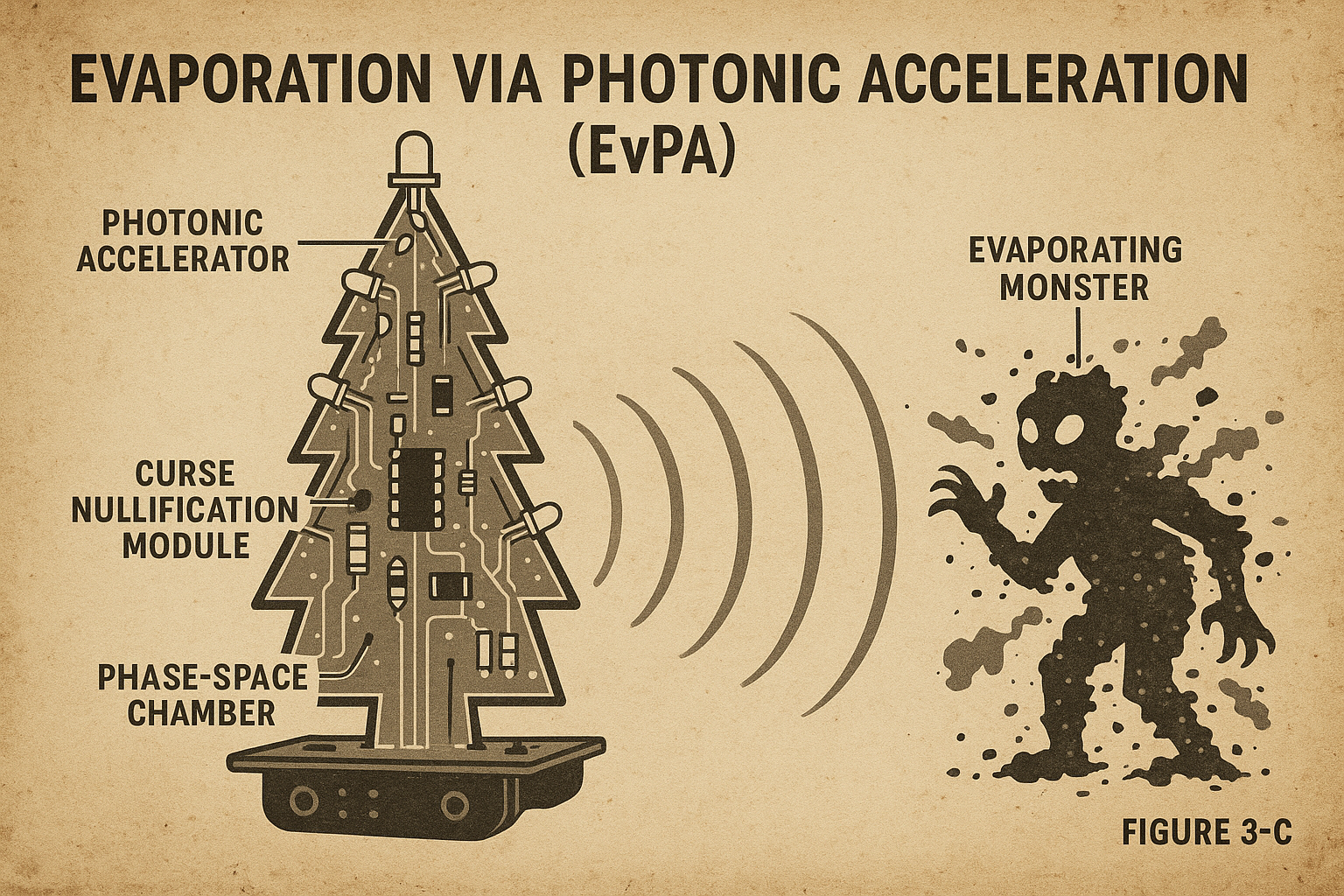
| This document provides technical analysis of the Quantanalog™ EvPA Core, a dual-board, triple-oscillator stabilization system featuring a Phase-Shifting Multispectral Non-Ionizing Photonic Emission Array (hereafter, “the Array”; colloquially: color-changing LEDs). The system was previously restricted under DoNTA oversight during the Cold War era. The circuit represents the earliest known attempt to create a low-power EvPA (Evaporation Photonic Acceleration) field using entirely analog hardware. | |
| The system utilizes paired A/B
oscillator boards, each containing three S9014 NPN transistors and
associated RC timing networks, which together generate the key to a
stabilized EvPA field: the Phase-Shifting Multispectral Non-Ionizing
Photonic Emission Array. When activated, both boards produce a shifting
multi-phase oscillation pattern that forms a low-frequency, non-ionizing
photonic interference field. This field, originally documented as the
EvPA Stabilization Layer, was classified as highly effective in
suppressing resonance cascade anomalies (designated ST, GBI, HL and MH
classes). |
|
| Unlike digital harmonic generators, or legacy Encabulator-derived systems, the Quantanalog EvPA Core exploits naturally occurring phase drift between its redundant oscillators. Earlier Encabulator-class devices relied on drawn-reciprocation dingle arms and sinusoidal depleneration to maintain harmonic alignment; the Quantanalog design instead leverages uncontrolled micro-drift as an intentional source of low-level stochastic interference. This drift, combined with the slow constructive/destructive interference cycle, creates a non-static output pattern that destabilizes and decoheres partial NTE (Non-Terrestrial Entity) manifestations. | |
| **Field Effectiveness:** Validated as highly effective in suppressing cellulose-derived manifestations of copyrighted villainy, including (but not limited to) Mad Scientists, composite Monsters, Vampiric Entities, “It”-class phenomena, Meta-Humanoid, Unbusted Ghosts, University-Educated Monsters, and related narrative-adjacent entities. Testing logs indicate that the system’s oscillation spread factor remained consistently within the 0.5 to 1.025 ∆Hz range, matching early theoretical thresholds for military-grade Meta-Humanoid-class decoherence. Operational radius was measured at 6.96 to 12.81 meters, depending on environmental conditions. | |
| The C-Board assembly provides regulated input power, isolation from battery noise, and mitigation of backflow oscillation—a known failure mode responsible for several early GBI laboratory incidents. The improved stability of this revision indicates that the design originated after the 1984 GBI Event. | |
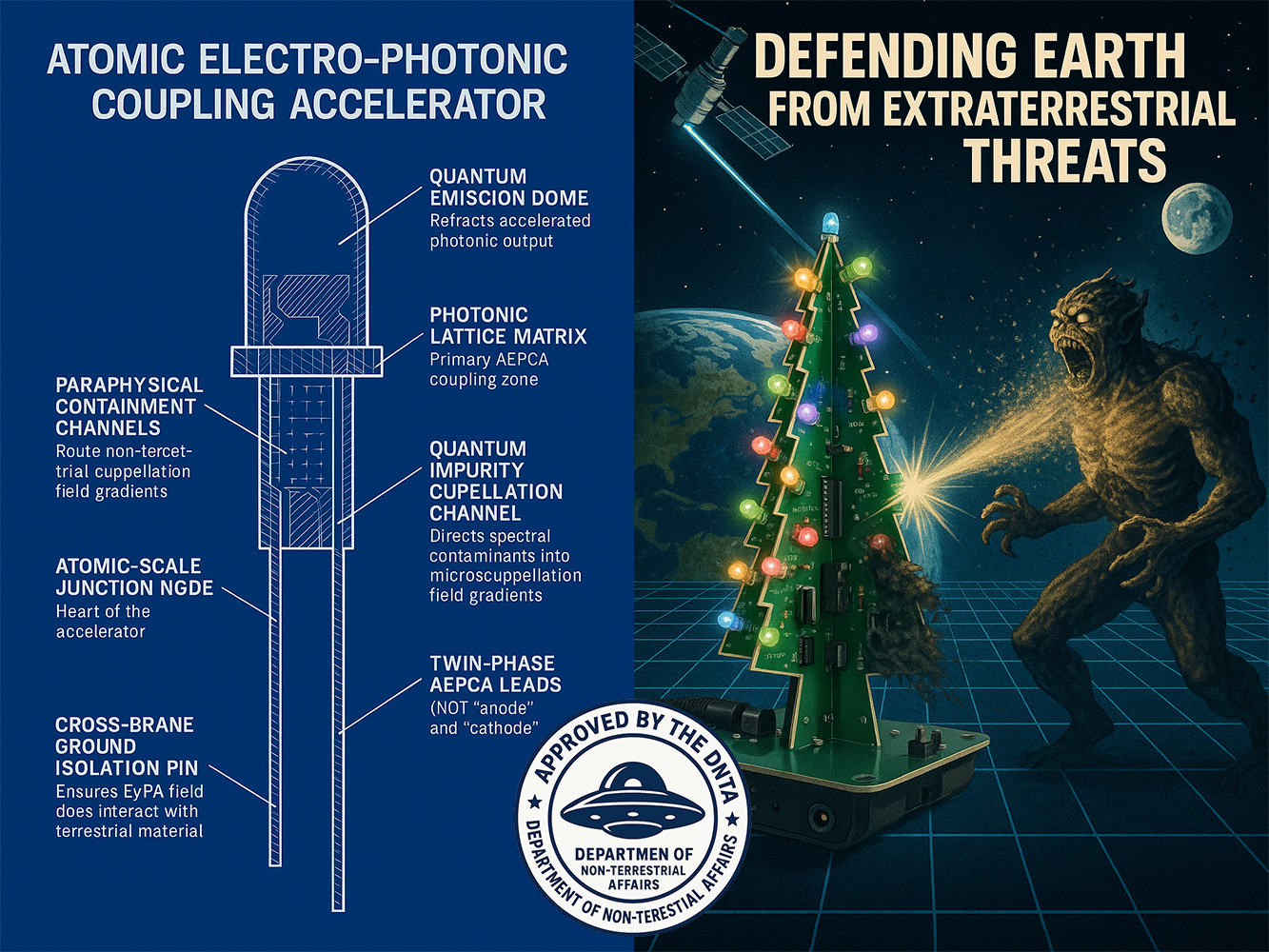
| Subsequent research into micro-scale EvPA systems suggests that this configuration represents the first successful, fully miniaturized and containment-safe EvPA emitter suitable for consumer-level deployment. This, in turn, explains its rediscovery and repurposing by a civilian startup decades later. | |
| DOCUMENT
STATUS: Declassified for public release under Technical Directive
22-19(b). Any modification, replication, or enhancement of this system
documentation for EvPA field use must comply with current DoNTA
Stability Ordinances, Section VII. Reproduction Rights maintained for
future releases and subject to copyright and trademark regulations
levied under penalty of United Stares Government, on this date
12/12/2025 END OF DOCUMENT | RELEASE APPROVED | tinyLEDtree.com |
|
 |
|
|
|||||||
These LED trees are made from small parts and assembled with a variety of solder products. We use a mix of Modern Lead-free (ROHS) and Classic 60/40 Tin-Lead, so some of the solder products we use may contain lead. Because of this, it will not be sold or shipped to California, due to state regulations (Prop.65). Also, if you have young or small children, please keep in mind that these are not children's toys, this product may contain toxic materials and have small parts that could become loose and pose a choking hazard. This product should be kept out of reach of young or small children.
We can build units that use lead-fee solder at assembly, upon request, with additional costs/fees.
Click here for the Solder Kit Manufacture's Information Publication...
(c) 2025 KimberLand Tech. Svcs., All Rights Reserved.